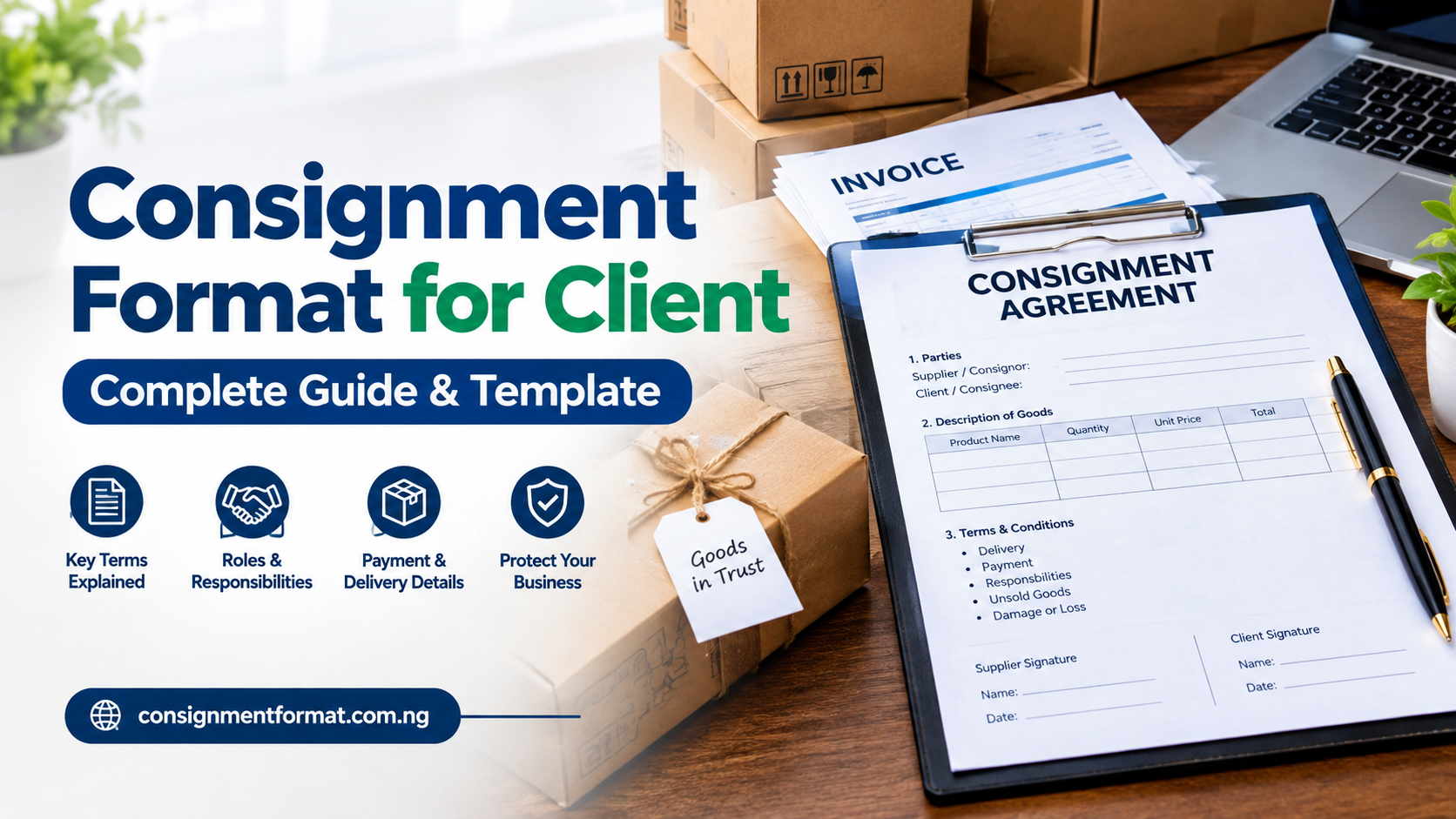
A consignment format for client is a written document that explains the terms between a business or supplier and a client when goods are provided for sale, distribution, display, or another agreed purpose. A clear format helps both sides understand what has been delivered, who is responsible for the goods, how payment will work, and what happens to unsold items.
Consignment Format for Client
Do You Need A Website For Your Business? Contact Devphiliplab On WhatsApp 08151796265
In 2026, businesses are increasingly using simple and well-organized documents to reduce misunderstandings and keep commercial transactions properly documented. Whether you operate a retail store, online business, wholesale company, or distribution service, having a clear consignment document can make the process easier for everyone involved.
This guide explains what a client consignment format should contain and provides a practical structure you can adapt to your business.
What Is a Consignment Format for a Client?
A consignment format is a written record used when one party provides goods to another party under agreed conditions, usually with payment taking place after the goods are sold or another agreed event occurs.
For example, a supplier may give products to a retailer to display and sell. The retailer may not purchase the products immediately. Instead, the supplier remains responsible for the goods until they are sold, depending on the terms agreed by both parties.
A good client consignment format records the important details of the arrangement so there is a clear reference for both sides.
The exact legal effect of a consignment arrangement can vary depending on the country, industry, and contract terms. Businesses should therefore make sure their final agreement complies with applicable local laws.
Click Here To Read Full Detailed Consignment Articles
The above link explains the article in detail, don’t abuse the nature of the content, the article is for educational purpose.
Why Is a Consignment Document Important?
A written consignment document can help prevent confusion between a client and supplier.
Without clear terms, disagreements may occur about:
- The number of products delivered
- Product prices
- Payment dates
- Responsibility for damaged goods
- Unsold products
- Returns
- Delivery costs
- Insurance
- Storage
- Record keeping
A properly prepared document gives both parties a shared understanding of the arrangement.
It can also make business administration easier because the parties have a written record of what was agreed.
Essential Sections of a Client Consignment Format
A professional consignment format does not have to be complicated. It should simply contain the information necessary to describe the transaction clearly.
1: Details of the Parties
Start by identifying the parties involved.
Include:
- Business or supplier name
- Client name
- Business address
- Contact information
- Registration or identification details where appropriate
- Name and position of the authorized representative
Make sure the information is accurate before the document is signed.
2: Description of the Goods
Clearly describe the products being provided under the consignment arrangement.
You may include:
- Product name
- Product code or SKU
- Quantity
- Model or specification
- Condition
- Agreed selling price
- Date supplied
For larger shipments, a separate product schedule or inventory sheet can be attached to the agreement.
3: Delivery and Acceptance
The document should explain when and how the goods will be delivered.
For example, it can state:
- Delivery date
- Delivery location
- Person responsible for receiving the goods
- Method of transportation
- Inspection procedure
- What happens if goods arrive damaged or incomplete
This section helps create a clear record of the condition and quantity of the goods when they are received.
4: Payment Terms
Payment terms are one of the most important parts of a consignment agreement.
Clearly state:
- Selling price or agreed valuation
- Commission or service fee, if applicable
- Amount payable to the supplier
- Payment schedule
- Payment method
- Reporting requirements
- Applicable taxes or charges
For example, the agreement may state that the client will provide a sales report at the end of each agreed period and make payment for products sold during that period.
The exact arrangement should reflect what both parties have actually agreed.
5: Responsibilities of the Client
The document should explain what the client is expected to do with the goods.
Responsibilities may include:
- Keeping accurate inventory records
- Storing products appropriately
- Taking reasonable care of the goods
- Reporting sales
- Making payments on time
- Informing the supplier about damaged or missing items
- Returning unsold goods when required
The responsibilities should be specific rather than vague.
6: Responsibilities of the Supplier
The supplier should also have clearly defined responsibilities.
These may include:
- Delivering the agreed products
- Providing accurate product information
- Providing invoices or relevant documentation
- Replacing defective products where agreed
- Collecting unsold products where applicable
- Maintaining accurate records
Clear responsibilities help both sides understand their role.
How Should Unsold Goods Be Handled?
Unsold goods are an important part of a consignment arrangement.
The agreement should explain what happens when products remain unsold after a particular period.
Possible arrangements include:
- Returning the goods to the supplier
- Extending the consignment period
- Reducing the selling price with approval
- Transferring ownership under agreed terms
- Continuing to hold the goods under the original arrangement
The parties should agree on the procedure before the transaction begins.
What Happens If Goods Are Damaged or Lost?
The consignment format should also address damage, theft, loss, or destruction of goods.
The agreement can explain:
- Who is responsible for ordinary handling risks
- When responsibility transfers
- How damaged products are reported
- Whether insurance is required
- How claims are handled
- What evidence may be required
Avoid using unclear language. The parties should understand exactly what their responsibilities are.
Simple Client Consignment Format Template
The following structure can be adapted for many ordinary business situations:
CLIENT CONSIGNMENT AGREEMENT
Date: [Insert Date]
Supplier/Consignor:
[Business Name]
[Address]
[Contact Details]
Client/Consignee:
[Client or Business Name]
[Address]
[Contact Details]
### 1. Purpose
The supplier agrees to provide the products listed in this document to the client under the agreed consignment terms.
2: Product Details
Product | Code | Quantity | Agreed Price
[Product name] | [Code] |[Qty] | [Amount]
|[Product name] | [Code] |[Qty] | [Amount]
3: Delivery
The products will be delivered to [location] on or around [date], subject to the delivery arrangements agreed by both parties.
4: Sales and Payment
The client will provide sales information according to the agreed reporting schedule. Payment for products sold will be made according to the agreed payment terms.
5: Unsold Products
Unsold products will be handled according to the return, extension, or other procedure agreed by the parties.
6: Damage or Loss
Each party’s responsibility for damaged, lost, or missing products will be determined according to the terms of this agreement and applicable law.
7: Records
Both parties should maintain accurate records relating to deliveries, sales, returns, and payments.
8: Termination
Either party may terminate the arrangement according to the notice and termination conditions stated in the agreement.
9: Signatures
Supplier/Authorized Representative:
Name: __________________
Signature: ______________
Date: ___________________
Client/Authorized Representative:
Name: __________________
Signature: ______________
Date: ___________________
Tips for Creating a Better Consignment Agreement in 2026
When preparing a consignment format for client, keep the document simple and specific.
First, avoid unnecessary legal or technical language. A client should be able to understand the agreement without having to interpret complicated sentences.
Second, keep product records accurate. Product names, quantities, prices, and identification numbers should match the actual goods supplied.
Third, clearly document payment arrangements. Do not leave important financial terms to verbal conversations.
Fourth, explain how returns and unsold products will be handled.
Finally, keep copies of signed documents and relevant transaction records.
For significant commercial arrangements, it is sensible to have the final document reviewed by a qualified legal professional in the relevant jurisdiction.
Frequently Asked Questions
Is a consignment format legally required?
Not every business arrangement requires the same type of document. Requirements depend on the transaction and applicable law. A written agreement is generally useful because it records what the parties agreed.
Can I customize a client consignment template?
Yes. A template should be adapted to the products, payment arrangements, responsibilities, delivery terms, and applicable laws relevant to the transaction.
Who owns goods under consignment?
Ownership depends on the specific arrangement and applicable law. The agreement should clearly state when ownership or responsibility changes, rather than relying on assumptions.
How long should a consignment agreement last?
There is no universal period. The parties can agree on a fixed period, renewal arrangement, or another suitable term.
Contact Devphiliplab on WhatsApp Here
if you need Consignment logistics website
Conclusion
A well prepared consignment format for client gives both parties a clear record of their commercial arrangement. It should identify the parties, describe the goods, explain delivery, establish payment terms, define responsibilities, and provide clear procedures for unsold, damaged, or returned products.
The most important principle is clarity. A simple document that accurately reflects what the parties have agreed is usually more useful than a complicated document filled with unclear language.
Before using any template for an important commercial transaction, review it against the laws and business requirements that apply to your particular location and industry.
1 thought on “Consignment Format for Client 2026: Complete Guideline”